Temperature-Sensitive Health Supplies
- Testing kits and supplies with cold storage requirements
- Other temperature-sensitive supplies on your program’s distribution list

Bring refrigerated public health resources to targeted indoor locations with a compact refrigerated public health vending machine designed for smaller spaces.

Built for programs focused on dispensing a specific set of products, the IDS Compact Refrigerated Public Health & Harm Reduction Vending Machine keeps temperature-sensitive supplies in a refrigerated storage cabinet just 29.5" wide. A rural clinic, campus health center, or single-location program can offer refrigerated resources without sacrificing floor space, all while gathering data your team needs to show your impact.
Connect with a Rep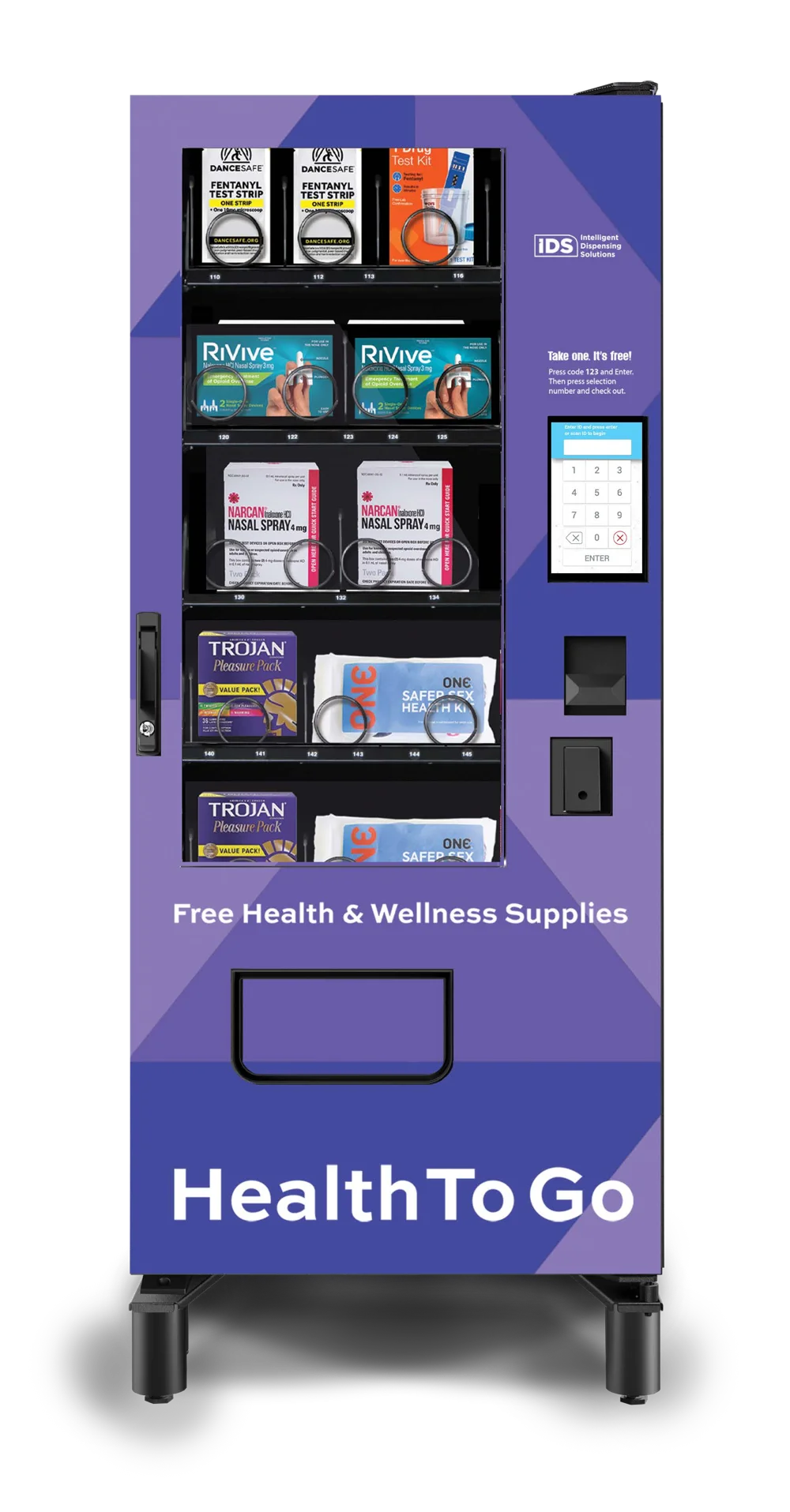
Cloud-based reporting tracks distribution by item, location, and time period for grant applications, renewals, and stakeholder updates.
Configurable for up to 36 unique selections in a 29.5" wide cabinet, so refrigerated resources fit clinics, campus buildings, and community sites with limited floor space.
Configurable trays accommodate boxed kits, bottles, packaged supplies, and items of various shapes and sizes.
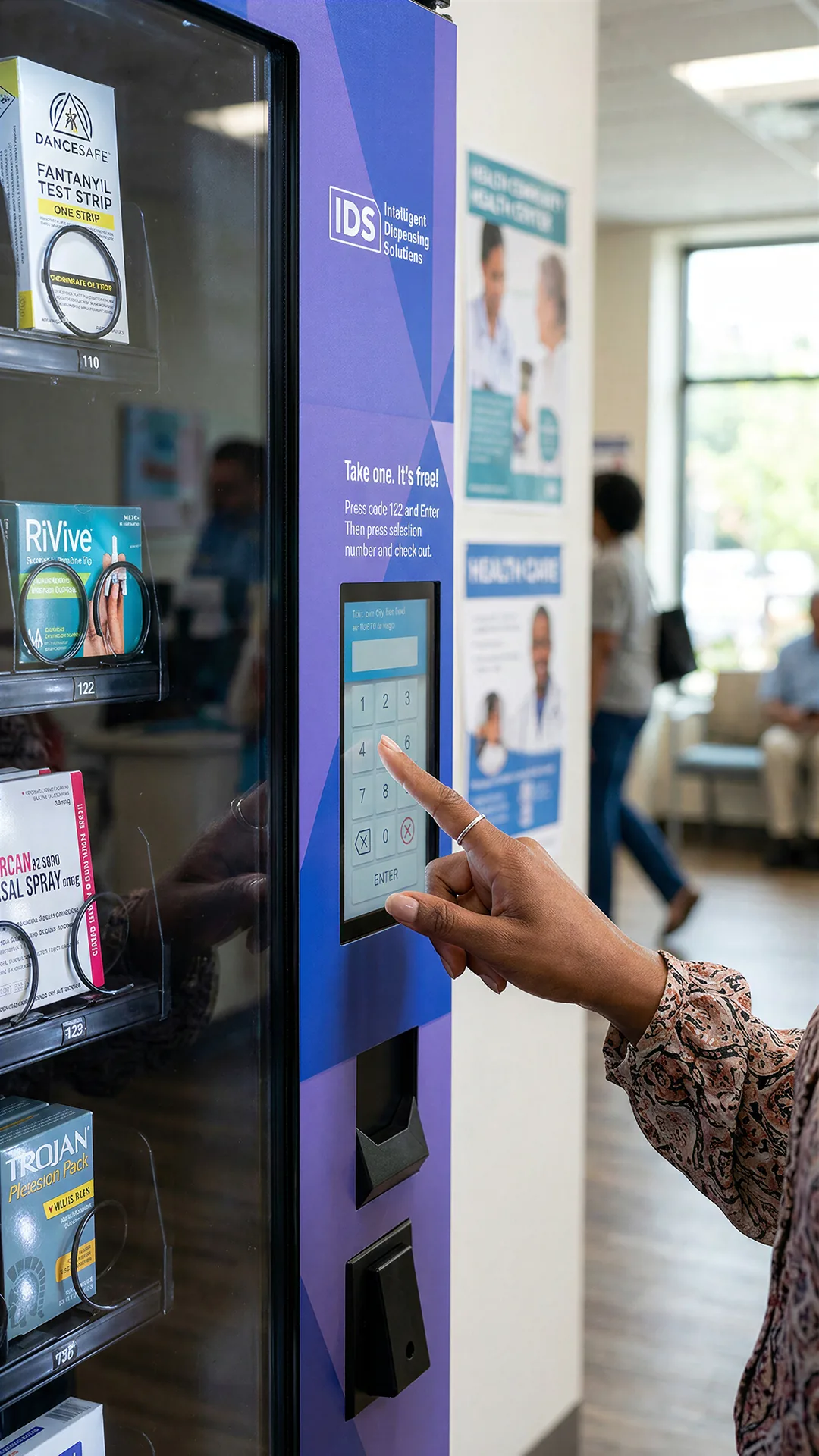
The 10.1" touch screen shows product information and can present optional anonymous questions at the point of access, such as how someone heard about your program.
For compatible perishable products, the Health Safety feature prevents dispensing if the machine’s internal air temperature remains above the programmed Health Safety Limit for more than 15 minutes.
Low-barrier access with optional data collection. Features a shared access code so individuals can obtain needed products without preregistering, while optionally collecting non-identifying information such as demographics or ZIP code. Product restrictions may apply when using a shared code. Users can also choose Individualized access with greater dispensing control, allowing the ability to preregister participants and provide a personal code or badge. This enables programs to establish different access levels, participant groups, and product dispensing rules.
A 3/8 HP refrigeration system keeps temperature-sensitive supplies in a climate-controlled environment for maximum product longevity.
An integrated sensor confirms every item reaches the person before the transaction is recorded, so your counts match what actually left the machine.
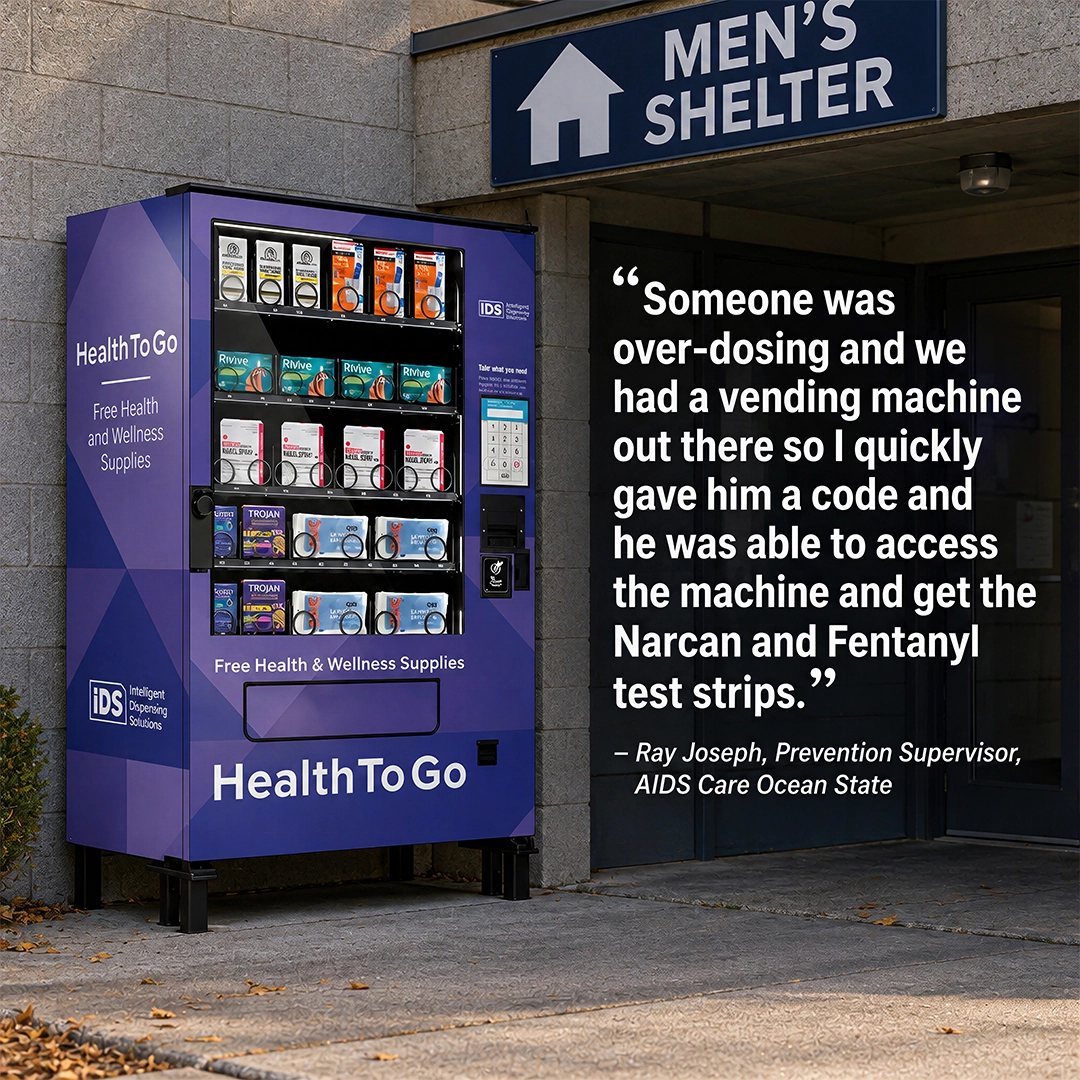
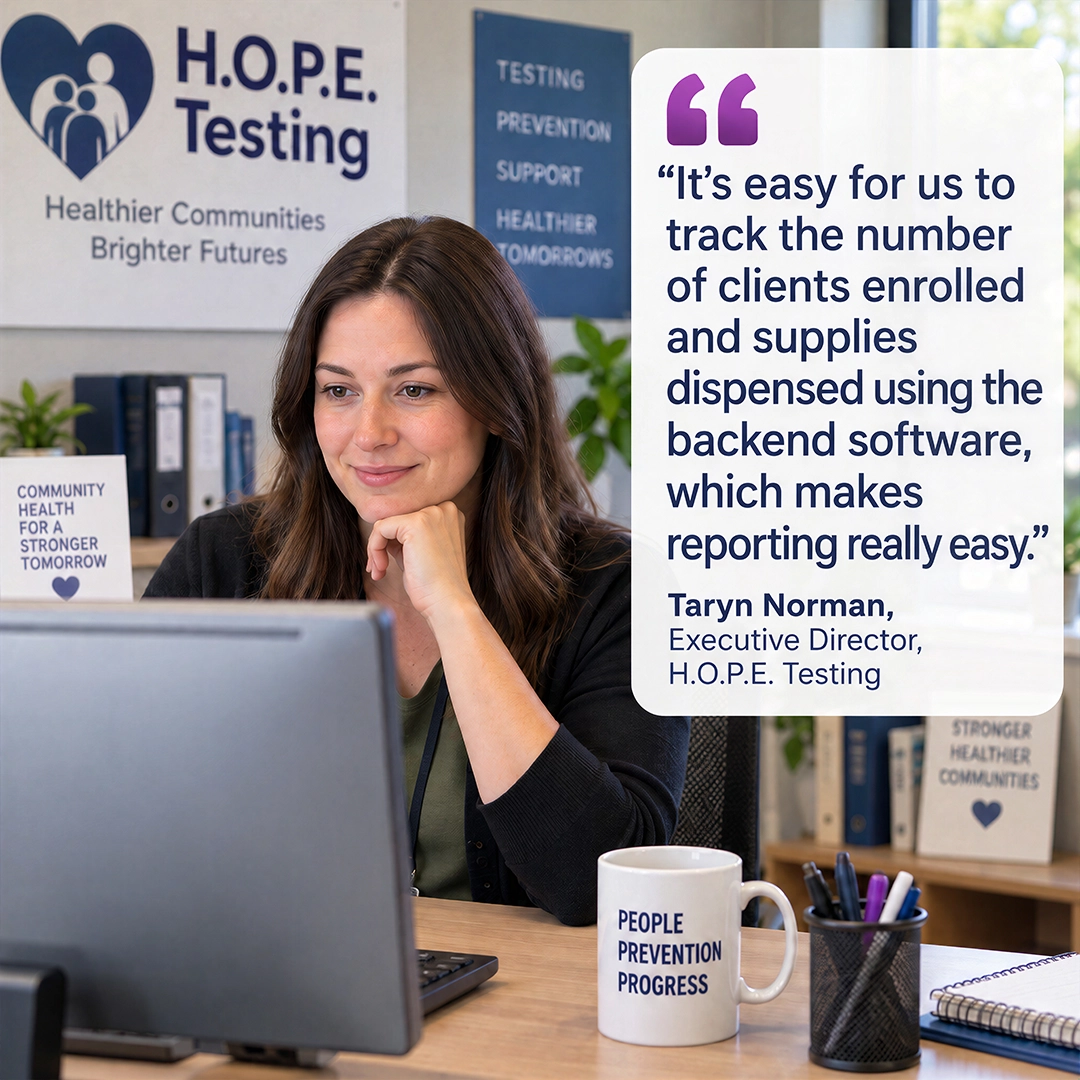
Client Testimonials
Many of the resources your program distributes need to stay cold, but a shared refrigerator behind a front desk only helps people during staffed hours and fails to track what’s used. The IDS Compact Refrigerated machine pairs a built-in refrigeration system with secure dispensing and iQ Technology, in a cabinet sized for a hallway, lobby, or supply room.
Get cold-chain storage in a 29.5" cabinet, about 11.5" narrower than a full-sized refrigerated machine.
Refrigerated resources stay available after office hours, so people can get what they need when they need it.
People retrieve supplies on their own, without requiring a face-to-face exchange.
A refrigerated storage cabinet and real-time counts help keep temperature-sensitive supplies safe and usable.
Low-stock alerts flag what needs restocking so you don’t have to check the machine by hand.
iQ Technology records what was dispensed, from which machine, and when, so reporting is ready when you need to share the impact.
| Comparison category | Standard Refrigerator | IDS Compact Refrigerated Vending |
|---|---|---|
| Availability | Resources are out of reach after your doors close. | Resources are available whenever someone needs them. |
| Reach | People who don’t want a face-to-face visit often won’t stop in. | People get what they need privately, with no one watching or asking questions. |
| Staff Time | Staff stop what they’re doing every time someone needs a supply. | Distribution runs on its own, so staff can focus on outreach and care. |
| Security | Anyone with access can open the door, and stock isn’t tracked unless you do a manual count. | Supplies stay secured until they’re dispensed, and every item is accounted for. |
| Restocking | Clients may find empty shelves if the fridge hasn’t been restocked yet. | Low-stock alerts tell your team what to restock when supplies are running out. |
| Reporting | Distribution logs are managed manually and often have information gaps. | Every distribution is recorded automatically and ready to share with a quick export. |
| Impact | Reporting gaps make it harder to renew grants and justify expansion. | Clear usage data strengthens grant renewals and makes the case for growth. |
Both IDS refrigerated machines run on the same core technology, including the built-in refrigeration system, guaranteed delivery sensor, flexible access options, and iQ Technology reporting. The difference comes down to size and capacity.
| Comparison category | IDS Compact Refrigerated Public Health & Harm Reduction Vending Machine | IDS High-Capacity Refrigerated Public Health & Harm Reduction Vending Machine |
|---|---|---|
| Unique Selections | Up to 36 unique selections, which cover a focused set of refrigerated resources. | Up to 60 unique selections, so one machine can offer a wide range of refrigerated resources. |
| Capacity | About 412 items. | About 664 items. |
| Footprint | 29.5" (75 cm) wide, about 11.5" narrower than the High-Capacity machine, with the same 72" height and 38" depth. | 41" (104 cm) wide, with a height of 72" and a depth of 38". |
| Common Placements | Rural health clinics, university health centers, community health centers, and single-location programs where space and staffing are limited. | Larger agencies, high-traffic sites, and central locations that serve many people each day. |
| Restocking | A smaller load is quicker to restock, which suits programs with a small team or focused usage. | More stock fits between refills, which suits sites with heavy, steady demand. |
The machine is built for public health resources that require refrigerated storage. Configurable trays handle boxed kits, bottles, and packaged supplies, so one machine can hold the refrigerated items your program distributes most. Features include compatibility with vaccine or immunization products where machine configuration, storage requirements, and program protocols have been validated.
Storage requirements vary by product and program, such as in a college infirmary or county health office. Organizations should follow manufacturer labeling and applicable vaccine storage and handling requirements when evaluating refrigerated dispensing.
The IDS Compact Refrigerated Public Health & Harm Reduction Vending Machine gives smaller programs cold-chain storage, private access, and reporting in a footprint that fits. Connect with a rep and see how it can extend your program’s reach.
Connect with a RepIt’s a refrigerated vending machine built for public health programs focused on dispensing specific items in a smaller footprint. This machine keeps temperature-sensitive resources cold and gives people private, self-service access to them. Every item dispensed is recorded, so your program can see how it’s serving your community.
This machine is designed for programs that need refrigeration but have limited space and staff, such as rural health clinics, universities, community health centers, and single-location programs. It gives these programs refrigeration without the footprint of a full-sized machine.
The IDS Compact Refrigerated Public Health & Harm Reduction Vending Machine has a built-in refrigeration system, so it can hold resources that need to stay cold. A standard IDS public health vending machine is a better fit for room-temperature supplies like harm reduction kits, hygiene items, and most testing kits. Many programs use both, and every machine reports into the same iQ Technology system.
Choose the Compact when your program offers a focused set of refrigerated resources and space or staffing is limited. It holds up to 36 different items in a 29.5" wide cabinet. The IDS High-Capacity Refrigerated Public Health & Harm Reduction Vending Machine holds up to 60 items in a 41" cabinet, which suits larger programs and busier locations. Some programs place Compact machines at satellite sites and a High-Capacity machine at a central location.
The IDS Compact Refrigerated Vending Machine uses Health Safety settings to help protect temperature-sensitive products. When configured, these settings can prevent designated items from being dispensed if temperature conditions aren’t suitable, helping reduce the risk of distributing compromised supplies. Your IDS representative can explain how the feature applies to your products and storage requirements.
The machine is 29.5" (75 cm) wide, 72" (183 cm) tall, and 38" (96.5 cm) deep. That’s about 11.5" narrower than the High-Capacity Refrigerated machine, so it fits lobbies, hallways, and supply rooms where a full-sized machine won’t.
It runs on a standard domestic outlet (115 VAC/60Hz, 8.5 amps) and connects to IDS’s web-based software through a wired internet connection (CAT5E). It weighs about 691 lbs., depending on configuration. IDS handles installation and setup, and your rep can help evaluate your site beforehand.
The machine fits wherever your community already goes for support, including rural clinics, campus health centers, community health centers, libraries, and nonprofit facilities. It can be installed indoors or outdoors, and an optional heated glass front helps the machine perform in colder outdoor conditions. Your IDS rep can help you evaluate sites.
A typical setup holds about 412 items and up to 36 different selections. Capacity varies with how you configure the trays. You can give your most-requested items more space or set the machine up for more variety. Your IDS rep will help you plan the layout.
The machine is built for public health resources that need to stay cold, including:
Your IDS rep can help you plan which resources to offer based on your program and community.
Yes. Adjustable trays fit boxed kits, bottles, and packaged supplies of different shapes and sizes, so one machine can hold a range of resources.
Yes. The built-in refrigeration system keeps temperature-sensitive resources in good condition. Real-time inventory tracking shows what’s moving and what isn’t, and iQ Technology can flag items as they approach expiration, so stock gets used or rotated before it goes to waste.
It can be. Programs choose how access works. Options include anonymous access with a community code or requiring users to register so they can use their assigned code. This way, user limits and detailed tracking can be set up if the program desires. For example, a program might post a shared code on the vending machine interface for anonymous access or limit registered individuals to a certain amount of specific items each week. This ensures supplies are available for everyone while still encouraging people to stay connected with your team.
Yes. The machine’s 10.1" touch screen can display optional, anonymous questions at the point of access, such as how someone heard about your program. That gives you insight into your community without creating a barrier to getting help.
Yes. iQ Technology lets your program set different access rules for staff and participants, so certain selections can be reserved for staff while the rest of the machine stays open to your community.
It takes routine distribution off your staff’s plate. People retrieve resources on their own, and the machine tracks what’s been dispensed, so your team spends less time handing out supplies and logging distribution, and more time on outreach and care.
Your team restocks the machine. Low-stock alerts from iQ Technology tell you what’s needed before it runs out, and the machine’s smaller capacity makes each restock quicker for a small team.
A built-in sensor confirms that each item drops before the transaction is recorded. If something doesn’t make it out, it isn’t counted, so your inventory and reports stay accurate.
iQ Technology records every distribution by item and time and turns that data into reports for grant applications, renewals, and updates to stakeholders and legislators. You don’t have to piece together logs by hand.
Yes. Every IDS machine reports into the same iQ Technology system, so you can see refrigerated and room-temperature distribution across all your locations in one place.
Many programs fund machines and supplies through sources such as SAMHSA grants, opioid settlement funds, state public health grants, and tribal funding. Eligibility depends on each funding source’s requirements, so confirm with your funder. Your rep can share how other programs have approached it.
Yes. An optional custom graphic wrap lets you design the machine around your program’s name, colors, and message, so people know what it is and who it’s from.
Pricing depends on how many machines you need, how they’re configured, and where they’ll be placed, so IDS scopes each solution to your program. Leasing and financing options are available to reduce upfront cost.
Connect with an IDS rep to talk through your community, your program goals, and the resources you want to offer. Your rep will schedule a live demo, help you plan placement and configuration, and handle installation and staff training once you’re ready.