Did you know that over 130 people die each day in the U.S. from an opioid overdose? (Source: CDC). With such a high number of critical incidents, access to rescue medications like Narcan is more critical than ever.
Accessing naloxone (or Narcan) used to be difficult, often requiring a trip to a pharmacy, clinic, or trained personnel — but emergencies don’t wait for business hours. Narcan vending machines are changing that, offering communities an immediate, stigma-free, and practical lifeline that helps save lives.
In this blog
We’ll cover:
- What a ‘Narcan vending machine’ is and how it works
- The role of harm reduction vending machine models
- Use cases and benefits for communities
- Key challenges and how they can be addressed
What Exactly Is a Narcan Vending Machine?
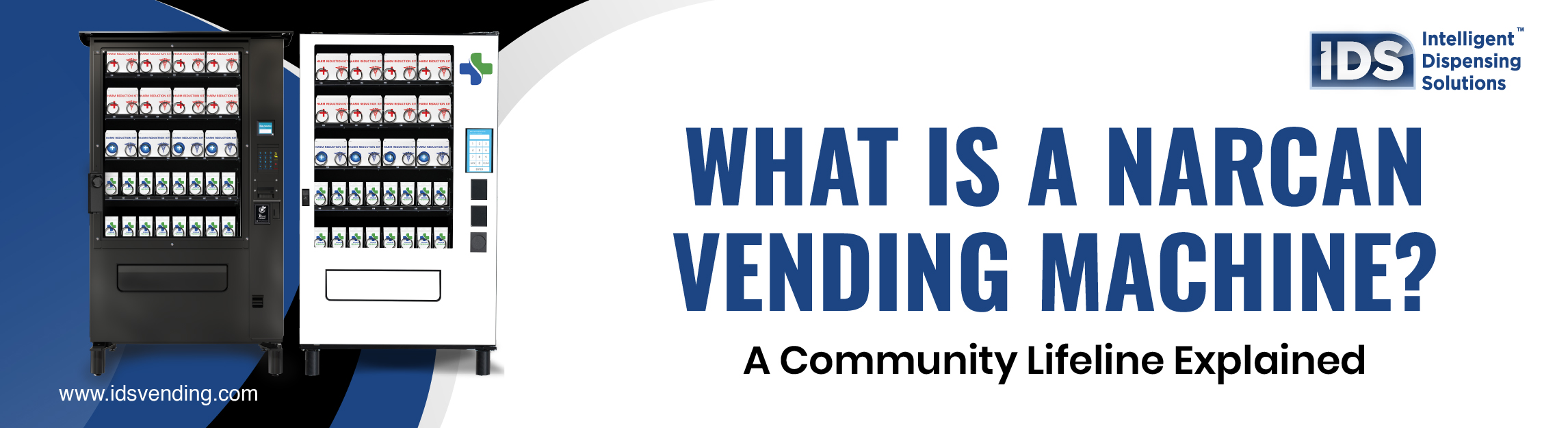
A Narcan vending machine is a specialized, temperature-controlled kiosk that dispenses naloxone (Narcan), the medication used to reverse an opioid overdose. Functioning like any vending device, these secure units allow people to access the life-saving drug any time, without judgment or delay.
At IDS, these machines are part of our Harm Reduction solutions. They provide convenient and secure 24/7 access to life-saving supplies, combined with real-time tracking and reporting. This ensures communities not only get reliable access to Narcan but also benefit from data and visibility to manage public health resources more effectively.
How It Works: The Details
Here’s how a typical opioid overdose vending machine operates:
| Component | Purpose |
| Secure Dispenser | Prevents tampering and ensures correct doses. |
| Access Code / Touch Screen | Some machines require minimal interaction to reduce misuse. |
| Temperature Control | Keeps Narcan and other medical supplies stable and safe. |
| Refill / Monitoring System | Alerts staff when stock is low. |
| Payment / Free Access | Many are free, while others may accept insurance or vouchers. |
To maximize convenience and fulfill the goal of 24/7 access, these kiosks are typically located in public, high-traffic areas, including near clinics, transit hubs, and homeless shelters.
Why Harm Reduction Vending Machines Matter
They reduce barriers. They fight stigma. They save lives.
Without this direct access to these machines, traditional barriers to obtaining harm reduction resources can lead to fatal delays in overdose intervention.
Narcan in a vending machine means:
- Immediate access during an overdose emergency
- Less fear of judgment or legal issues
- Overdose reversal outside standard business hours
Real-World Use: Success Stories Across Communities
The scale of the opioid crisis shows why these machines matter. Just 2 milligrams of fentanyl can be enough to cause an overdose, and in 2022 alone, more than 75,000 people in the U.S. died from fentanyl-related overdoses. Communities are responding with vending-based solutions that bring Narcan directly where it’s needed most.
Cities such as Winston-Salem and Philadelphia have already installed Narcan vending machines in malls, detention centers, college campuses, and other public spaces. These placements ensure that at-risk populations have quick access to life-saving medication around the clock.
One powerful example comes from Forsyth County, North Carolina. During an overdose near the local jail, a bystander ran to a Narcan vending machine on site, retrieved the medication, and revived the individual before paramedics arrived. By the time EMS reached the scene, the person was sitting up and talking. This incident highlights how an opioid overdose vending machine can close the gap before first responders can intervene. (Source: The Charlotte Post)
As Ashley Hubler, Chief Marketing Officer of the Wittern Group, noted:
“These organizations, they may be closed at five but with a machine that could be outdoors or placed in a variety of places,” “Now the end users can access the machine regardless if it’s four o’clock during business hours or two o’clock in the morning [to] access the supplies when they need them.”
Beyond North Carolina, similar programs are underway in Michigan, Nevada, Washington, and Indiana. Nonprofits or local governments lead many, and some machines even include additional supplies such as snacks or hygiene products. Together, these efforts show how harm reduction vending machines are transforming from a pilot idea into a proven community lifeline.
What’s Needed to Make It Work
These machines don’t just pop up overnight. Key factors:
- Regulatory support – laws must allow over-the-counter dispensing of naloxone via vending
- Funding – cost of the machine, refills, maintenance
- Community acceptance – reducing stigma so people use them freely
- Proper education – signage, instruction on how to use Narcan
Final Thoughts
A Narcan vending machine is more than just any other machine. It’s hope, ready whenever someone needs it. In a world where opioid overdoses keep climbing, these machines can make a difference.
Want to learn more about how a harm reduction vending machine can be brought to your area? Contact IDSVending today to learn how the opioid overdose vending machine initiative can be incorporated into your community safety plan.