
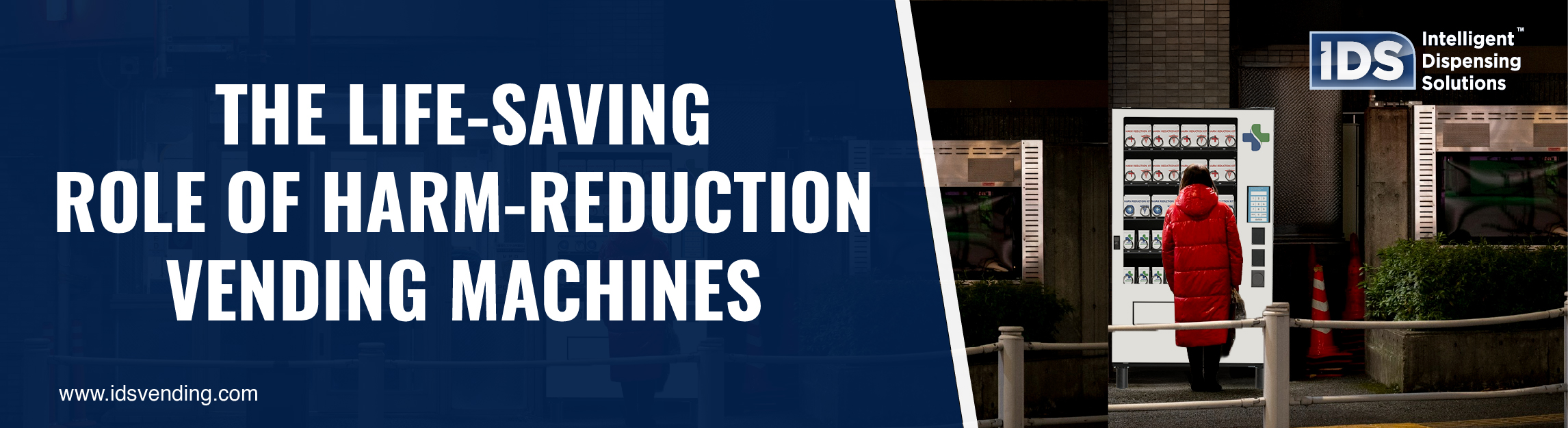
Every year, the United States loses approximately 100,000 lives1 to drug overdoses, according to the CDC, National Centre for Health Statistics. While overdose deaths have declined slightly in recent years, they remain alarmingly high. Communities nationwide are looking for innovative solutions, and harm reduction vending machines have emerged as a compassionate and practical approach to address this crisis.
This blog will help you:
- Understand harm reduction and its role in combating overdose deaths.
- Explore how vending machines extend life-saving resources.
- Learn about their impact, from reducing disease spread to encouraging safer drug use.
- Discover the challenges and benefits of harm reduction programs.
What Is Harm Reduction and Why Does It Matter?
Harm reduction focuses on minimizing the risks associated with drug use rather than insisting on abstinence. This approach provides individuals already using drugs with tools to protect themselves, such as clean needles, fentanyl test strips, and Narcan to reverse overdoses. The goal is simple: save lives and reduce harm.
Harm reduction is built on compassion rather than judgment. It helps those struggling with addiction stay safe and healthy until they’re ready to seek further help.
How Do Harm Reduction Vending Machines Work?
Harm reduction vending machines distribute vital supplies such as:
- Clean syringes and pipes to prevent the spreading of infectious diseases like hepatitis C and HIV.
- Narcan, a life-saving medication that reverses opioid overdoses.
- Fentanyl test strips to detect dangerous substances in the drug supply.
- Wound care kits to treat infections and injuries.
- Condoms and emergency contraception for safe sex practices.
These machines are temperature controlled to preserve medications and can be accessed 24/7, ensuring help is available when traditional clinics are closed.
Do Harm Reduction Vending Machines Enable Drug Use?
Critics often argue that harm-reduction programs encourage drug use. However, experts disagree. According to research in Clark County, Nevada, the implementation of vending machines dispensing naloxone was linked with a measurable reduction in overdose fatalities.
Why Are These Machines Effective?
Harm-reduction vending machines have proven to be life-saving:
- A study in Nevada showed a 15% reduction in overdose deaths within the first year of implementing such machines.
- Research from Cincinnati linked 24/7 access to supplies with a slower spread of HIV.
- These machines provide a low-barrier entry point for individuals to connect with harm reduction services.
Breaking Myths: “Enabling” or Empowering?
| Myth | Reality |
|---|---|
| Vending machines encourage drug use. | Most users are already drug-dependent; the machines reduce harm. |
| These programs lead to increased crime or loitering. | Studies show no significant rise in crime rates. |
| It’s a waste of public funds. | Harm reduction saves money by preventing costly hospital visits and treatments. Compelling evidence shows that it can be cost-effective in the long-term. |
Challenges and Pushback
Despite their benefits, harm reduction vending machines face resistance. Critics cite concerns about increased public drug use and needle litter. In some states, drug paraphernalia laws restrict their use. Moreover, stigma surrounding drug use and misconceptions about harm reduction can make community acceptance difficult. Yet public health experts emphasize that the advantages far outweigh the drawbacks.
The Human Impact: A Story from North Adams
In North Adams, Massachusetts, a harm reduction vending machine outside Berkshire Harm Reduction has become a vital lifeline. Clients like Brian, who once risked exposure to hepatitis C, now have discreet access to clean needles and life-saving tools like Narcan. As Brian says, “It’s come in handy quite a few times.” This local success story is part of a national trend. That movement began in 2017 when Intelligent Dispensing Solutions created the first continental U.S. harm reduction machine, which debuted in Nevada. Since then, hundreds have been sold across at least 35 states, a surge driven by the pandemic and the availability of federal grants aimed at combating the opioid crisis. (Source: Wbur)
Building a Better Future
The success of harm reduction vending machines highlights the need for innovative, compassionate solutions to the overdose crisis. These machines save lives, reduce the spread of disease, and offer a first step for individuals seeking help.
Interested in how harm reduction strategies are making a difference? Discover how IDS’ Harm Reduction vending machines and technology can save lives and build safer communities. Support harm reduction efforts by learning more about these innovative vending machines.